
Search Questions
Search
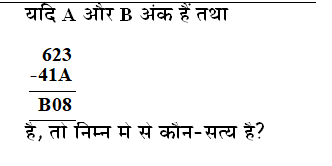


Q: Which of the following statements for a parallel circuit is true?
- A. The net current of a parallel circuit is always less than that of individual currents.
- B. The potential difference across individual resistances of a parallel circuit is always unequal.
- C. The net resistance of a parallel circuit is always less than the sum of individual resistances.
- D. The net resistance of a parallel circuit is always greater than the sum of individual resistances.
Correct Answer:
Option C - A parallel circuit, comprises branches so that the current divides and only part of it flows through any Branch.
The net resistance of a parallel circuit is always less than the sum of individual resistance. While the potential difference across individual resistance of a parallel circuit is always equal and the total current is the sum of the currents flowing through each component.
C. A parallel circuit, comprises branches so that the current divides and only part of it flows through any Branch.
The net resistance of a parallel circuit is always less than the sum of individual resistance. While the potential difference across individual resistance of a parallel circuit is always equal and the total current is the sum of the currents flowing through each component.
Explanations:
A parallel circuit, comprises branches so that the current divides and only part of it flows through any Branch. The net resistance of a parallel circuit is always less than the sum of individual resistance. While the potential difference across individual resistance of a parallel circuit is always equal and the total current is the sum of the currents flowing through each component.Address
12, Church Ln, The Adelphi, Allen Ganj, Prayagraj, Uttar Pradesh 211002
+91 9554973128
info.yctbooks@gmail.com
Download Our App